Introduction
Starting a SaaS business can be both exciting and challenging. Whether you’re a first-time entrepreneur or an experienced founder, navigating the journey from idea to a scalable SaaS product requires planning, strategy, and execution.
Software as a Service (SaaS) has become one of the fastest-growing business models because it allows companies to deliver value to customers over the internet, without the need for physical products or complex installations. From cloud-based tools to CRM platforms and productivity apps, SaaS solutions have transformed the way businesses operate.
This guide provides a step-by-step roadmap for building a successful SaaS business. By following these 12 steps, you will learn how to validate your idea, develop a minimum viable product (MVP), acquire and retain customers, optimize pricing, and scale efficiently. Each step is designed to be actionable, practical, and easy to implement, ensuring that you build a SaaS product that not only works but thrives in a competitive market.
Step1: Idea Validation & Market Research (Deep Dive)
Starting a SaaS business without proper market research is like sailing without a compass. Idea validation ensures that your solution solves a real problem for real people and has enough demand to be profitable. Let’s break it down step by step.

1.1 Identify Real Pain Points
The first step in idea validation is understanding what problems users actually face. Many startups fail because they build products based on assumptions rather than evidence.
Actionable Steps:
- Online Research:
- Explore forums like Reddit, Quora, ProductHunt, SaaS-related Facebook groups.
- Identify recurring complaints and frustrations related to the niche.
- Track how competitors are solving (or failing to solve) these problems.
- Explore forums like Reddit, Quora, ProductHunt, SaaS-related Facebook groups.
- Customer Interviews:
- Target at least 20–30 potential users.
- Ask open-ended questions:
- “What’s your biggest challenge with [problem area]?”
- “How do you currently solve this?”
- “What would make a solution irresistible for you?”
- “What’s your biggest challenge with [problem area]?”
- Listen for emotional pain points, not just functional ones.
- Target at least 20–30 potential users.
- Surveys:
- Use tools like Google Forms, Typeform, or SurveyMonkey.
- Ask quantitative and qualitative questions to measure interest and pain severity.
- Use tools like Google Forms, Typeform, or SurveyMonkey.
Pro Tip: Look for high frustration + high willingness to pay. That’s your sweet spot.
1.2 Competitor Analysis & Gap Identification
Even if a market looks crowded, there’s usually a gap you can exploit.
Competitor Research Framework (SWOT Style)
| Competitor | Strengths | Weaknesses | Opportunities | Threats |
| ExampleCRM | Popular UI, integrations | Expensive, slow support | Affordable plan, faster onboarding | Market saturation |
Actionable Steps:
- Make a list of 5–10 competitors.
- Analyze features, pricing, user reviews, and social engagement.
- Highlight gaps in usability, pricing, or customer support.
Example: Slack’s competitors in team chat were clunky and enterprise-heavy. Slack capitalized on simplicity + freemium model.
1.3 Validate Market Demand
Once you identify the problem and competition, check if people are willing to pay for your solution.
Techniques:
- Landing Page MVP Test:
- Build a simple page explaining your product concept.
- Include a “Join Waitlist” or “Sign Up for Early Access” CTA.
- Use Google Ads or LinkedIn Ads to drive targeted traffic.
- Build a simple page explaining your product concept.
- Pre-Sales / Beta Offers:
- Offer early access in exchange for feedback or a small pre-payment.
- Measures real intent to pay, not just clicks or likes.
- Offer early access in exchange for feedback or a small pre-payment.
- Social Proof Validation:
- Post polls on LinkedIn/Twitter targeting your niche.
- Engage with potential users in communities.
- Track the number of responses, comments, and shares as interest indicators.
- Post polls on LinkedIn/Twitter targeting your niche.
Pro Tip: Focus on quality leads over quantity. 50 serious beta users are better than 500 indifferent signups.
1.4 Refine Your Unique Value Proposition (UVP)
Your UVP is the core of your messaging. It should clearly convey:
- What problem you solve
- How you solve it better than competitors
- The outcome for the user
UVP Template:
“For [target user], [product name] is a [product type] that [primary benefit], unlike [main competitor], it [unique differentiator].”
Example:
“For small marketing teams, TaskFlow is a project management SaaS that reduces task tracking time by 50%. Unlike traditional tools, it automates reminders and integrates seamlessly with popular apps.”
1.5 Validate Pricing Potential Early
Even before building the product, estimate willingness to pay.
- Include pricing options on your landing page test.
- Ask survey participants which pricing plan they would consider.
- Test freemium vs paid tiers conceptually.
Pro Tip: If early users hesitate at the suggested price, your idea may need more value or differentiation.
1.6 Key Metrics to Track for Step 1
| Metric | Why It Matters | How to Measure |
| Survey Response Rate | Indicates interest | # responses ÷ total invitations |
| Landing Page Signups | Shows initial demand | # signups ÷ # visitors |
| Engagement Level | Measures problem severity | Comments, emails, shares |
| Willingness to Pay | Validates monetization | Survey or pre-sales feedback |
✅ Step 1 Summary Checklist
- Conduct online research and forums analysis
- Interview at least 20–30 potential users
- Survey target audience with 5–10 key questions
- Analyze competitors’ strengths and weaknesses
- Identify feature/UX gaps and opportunities
- Build landing page MVP to test interest
- Test early pricing and willingness to pay
- Refine your UVP for clarity and differentiation
Step 1 Complete: You now have validated problem, market demand, and a unique value proposition. You’re ready for MVP development in Step 2.
Step 2: Minimum Viable Product (MVP) Development
Building an MVP is the most critical step after idea validation. It allows you to test assumptions, get real user feedback, and save time and money before fully developing your SaaS product.
2.1 Define the Core Features
The goal of an MVP is not to build everything, but to focus on what solves the core problem for your users.
Actionable Steps:
- List all potential features
- Include every feature you imagine, from basic to advanced.
- Include every feature you imagine, from basic to advanced.
- Prioritize using MoSCoW Method
- Must-have → core features needed for initial launch
- Should-have → important but not critical
- Could-have → nice-to-have, optional
- Won’t-have → save for later
- Must-have → core features needed for initial launch
- Validate core features
- Ask potential users: “Which of these features is most important to you?”
- Focus on 3–5 core features for your MVP launch.
- Ask potential users: “Which of these features is most important to you?”
Example: For a CRM MVP:
- Must-have: Contact management, task tracking
- Should-have: Basic reporting
- Could-have: Email integrations
- Won’t-have: AI-powered analytics (for later stages)
2.2 Choose the Right Development Approach
Depending on your technical expertise and budget, you have multiple ways to build your MVP:
Options:
- No-Code / Low-Code Tools
- Bubble, Adalo, Glide, Webflow
- Fast and cheap, ideal for testing concepts
- Bubble, Adalo, Glide, Webflow
- Custom Development
- Using React, Node.js, Django, etc.
- More control and scalability, requires developers
- Using React, Node.js, Django, etc.
- White-Label Solutions
- Leverage pre-built software and customize branding/features
- Fastest way to market for certain niches (e.g., SaaS for credit repair, real estate CRM)
- Leverage pre-built software and customize branding/features
Pro Tip: For early-stage validation, no-code MVPs work best to gather feedback quickly.
2.3 MVP UX/UI Design
User experience is crucial even in an MVP. A simple, intuitive design increases adoption and reduces churn.
Actionable Steps:
- Use wireframing tools: Figma, Sketch, Adobe XD
- Keep UI minimal: only core features visible
- Focus on time-to-value: users should see the benefit in first 5 minutes
- Test flows with 5–10 beta users before full MVP launch
Example: Slack’s early MVP focused on messaging and file sharing, keeping other features for later iterations.
2.4 Beta Testing & Feedback Loop
Your MVP is not a finished product; it’s a tool to learn from real users.
Step-by-Step Beta Testing Framework:
- Select 10–50 target users from your research
- Define success metrics:
- Daily Active Users (DAU)
- Feature adoption rates
- Completion of key tasks
- Daily Active Users (DAU)
- Collect feedback using:
- Surveys (Typeform, Google Forms)
- In-app feedback widgets (UserVoice, Intercom)
- Video call interviews for qualitative insights
- Surveys (Typeform, Google Forms)
- Iterate weekly or bi-weekly based on feedback
- Document pain points, feature requests, and drop-offs
Pro Tip: Focus on why users are dropping off rather than just feature requests.
2.5 MVP Pricing & Pre-Sales
Even before full launch, consider testing pricing and monetization.
Strategies:
- Landing page with pricing tiers: Collect emails for early adopters
- Early-bird or pre-sale offers: Validate willingness to pay
- Freemium option: Gauge adoption and feature interest
Example: Dropbox offered extra storage for referrals in their MVP phase, which rapidly increased adoption.
2.6 MVP Metrics to Track
| Metric | Purpose | How to Measure |
| Activation Rate | Users completing first key task | In-app tracking, Mixpanel |
| Feature Adoption | Which features are most used | Product analytics dashboards |
| User Feedback Score | Satisfaction & pain points | NPS, surveys |
| Churn Signals | Identify early drop-offs | DAU/WAU ratio, session duration |
| Pre-sale Conversion | Monetization validation | Landing page signups & payments |
2.7 Real-Life MVP Examples
- Slack: Started as an internal tool for Tiny Speck, launched MVP with just messaging & file sharing.
- Dropbox: MVP was a demo video showing file-sync workflow; early signups validated demand.
- Airbnb: Early MVP was just a basic website with photos of their apartment; confirmed user interest before building full platform.
Lesson: Focus on core value, quick iteration, and user validation rather than perfect features.
✅ Step 2 Summary Checklist
- List all potential features and prioritize with MoSCoW
- Choose development approach: no-code, custom, or white-label
- Design minimal UI focusing on time-to-value
- Select beta users and define success metrics
- Collect qualitative & quantitative feedback
- Iterate weekly based on real data
- Test pricing & pre-sale validation
- Track MVP metrics: activation, feature adoption, churn
Step 2 Complete: Your MVP is ready for real-world testing. You now have validated core features, early feedback, and initial pricing insights. Next step is Customer Onboarding & Activation, where we ensure users experience value immediately.
Step 3: Customer Onboarding & Activation
Customer onboarding is the process of guiding new users to achieve their first “aha” moment with your SaaS product. Proper onboarding increases activation rates, retention, and reduces churn.
3.1 Define the “Aha” Moment
Every SaaS product should have one key action that proves value to the user.
Actionable Steps:
- Identify the primary success metric:
- Example: For Slack → sending first message
- For Trello → creating first board
- For Zoom → scheduling first meeting
- Example: For Slack → sending first message
- Map the steps users must take to reach this moment
- Simplify the process as much as possible
Pro Tip: Users should experience value in the first 5–10 minutes of using your product.
3.2 Onboarding Funnel Design
Your onboarding funnel guides users from signup → activation → retention.
Step-by-Step Funnel:
- Welcome Email
- Greet user and set expectations
- Include a 1-click action to start using the product
- Greet user and set expectations
- In-App Tutorial / Product Walkthrough
- Interactive guides for core features
- Tooltips and checklists for first steps
- Interactive guides for core features
- Progress Indicators
- Show user what’s left to complete the onboarding
- Gamify completion to encourage engagement
- Show user what’s left to complete the onboarding
- Follow-Up Email Sequences
- Email 1: Tips for first task completion
- Email 2: Highlight advanced features
- Email 3: Invite to webinars or support channels
- Email 1: Tips for first task completion
Example: HubSpot sends onboarding emails highlighting how to set up CRM pipelines, guiding users step by step.
3.3 Personalization & Segmentation
Not all users have the same needs. Segment onboarding improves engagement.
Segmentation Examples:
- By role: Marketing, Sales, IT, etc.
- By company size: Startup vs Enterprise
- By goals: Productivity, automation, analytics
Actionable Tactic:
- Use conditional flows in your onboarding
- Example: If a user selects “Sales Manager,” show CRM features first, skip irrelevant features
3.4 Automation Tools for Onboarding
Automation saves time and ensures consistent experience for every user.
Recommended Tools:
- Intercom / Drift: Chatbots for onboarding and support
- Appcues / Pendo / Userpilot: In-app guides, walkthroughs, checklists
- Mailchimp / Customer.io: Automated email sequences
Pro Tip: Automate repetitive tasks but keep human support for complex issues.
3.5 Measure Activation & Engagement Metrics
Key metrics help optimize onboarding and detect friction points.
| Metric | Why It Matters | Example Tools |
| Activation Rate | % users completing first key action | Mixpanel, Amplitude |
| Time to First Value (TTFV) | Speed of reaching “aha” moment | Product analytics |
| Feature Adoption | Which features are most used | Heap, Pendo |
| Drop-off Points | Where users abandon onboarding | Funnel analytics |
Example Insight: If 40% drop at step 2 of onboarding, simplify instructions or add tooltips.
3.6 Gamification & Motivation
Gamification increases engagement during onboarding.
Techniques:
- Progress bars for feature completion
- Badges for finishing tasks
- Reward users for inviting others or completing setup
Example: Duolingo’s XP system encourages daily learning. In SaaS, small incentives like extra features or storage can motivate users.
3.7 Continuous Onboarding
Onboarding is not a one-time activity. Continuous engagement ensures long-term retention.
Strategies:
- In-app prompts for unused features
- Periodic tips via email
- Customer success check-ins after 30/60/90 days
- Track behavior to trigger relevant nudges
Example: Slack periodically highlights new integrations based on user activity.
✅ Step 3 Summary Checklist
- Identify the product’s “aha” moment
- Design onboarding funnel: signup → activation → retention
- Personalize onboarding based on user segment
- Implement automation tools for guides and emails
- Track activation & engagement metrics
- Apply gamification for motivation
- Implement continuous onboarding & check-ins
Step 3 Complete: Users are now guided to experience value quickly, improving chances of becoming paying and engaged customers.
Step 4: Pricing & Monetization Strategies
Pricing is not just a number—it communicates value. A strong SaaS pricing strategy can maximize revenue, improve conversion, and retain customers.
4.1 Choose the Right Pricing Model
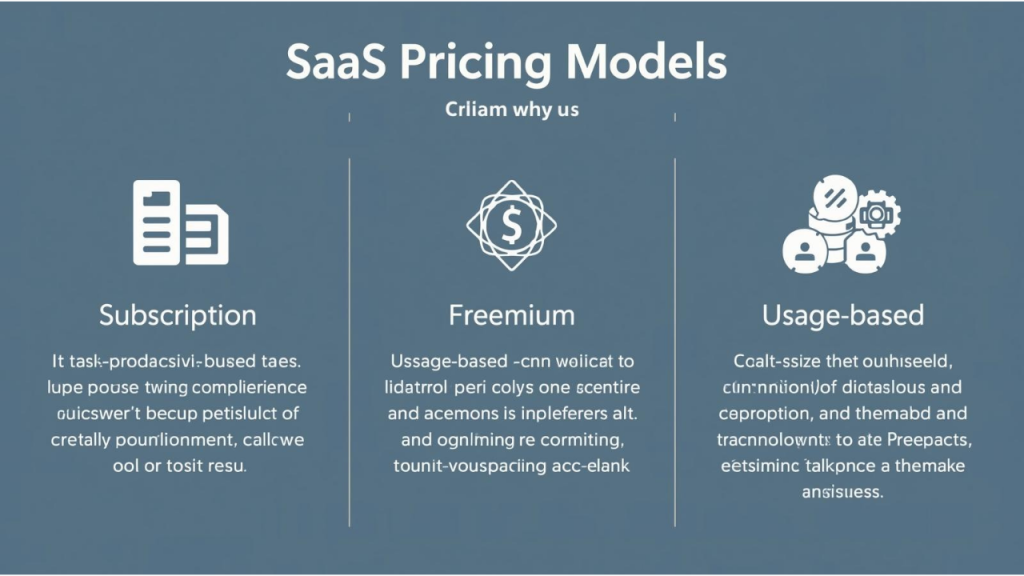
Different SaaS businesses require different pricing models. Common options include:
- Subscription-Based (Recurring Revenue)
- Most common for SaaS
- Monthly or annual payments
- Predictable revenue and easier forecasting
- Most common for SaaS
- Freemium Model
- Offer free basic features to attract users
- Encourage upgrade to paid tiers
- Example: Slack, Zoom
- Offer free basic features to attract users
- Tiered Pricing
- Offer multiple plans (Basic, Pro, Enterprise)
- Target different user segments
- Encourage upgrades by limiting features in lower tiers
- Offer multiple plans (Basic, Pro, Enterprise)
- Usage-Based Pricing (Pay-as-You-Go)
- Users pay for what they use
- Works for APIs, storage, bandwidth-based SaaS
- Users pay for what they use
- One-Time Payment / Lifetime License
- Rare in SaaS, more common in niche tools or small utilities
- Rare in SaaS, more common in niche tools or small utilities
Pro Tip: Combine Freemium + Tiered Pricing for maximum adoption and revenue potential.
4.2 Tiered Pricing Strategy
Tiered pricing allows users to start small and upgrade as their needs grow.
How to Structure Tiers:
- Basic: Core features, limited usage
- Pro: Most features, medium usage, better support
- Enterprise: All features, high usage, premium support & customization
Actionable Steps:
- Identify feature-value mapping
- Which features are most valuable to target users?
- Which features are most valuable to target users?
- Assign features to tiers strategically
- Price incrementally to encourage upgrades
- Example: Basic $10 → Pro $30 → Enterprise $100+
- Example: Basic $10 → Pro $30 → Enterprise $100+
Example: HubSpot CRM:
- Free → limited contacts & reporting
- Starter → more contacts, email automation
- Professional → advanced reporting & integrations
- Enterprise → full customization, dedicated support
4.3 Psychological Pricing Techniques
Pricing is not just math; it’s psychology.
Techniques:
- Charm Pricing: $29 instead of $30
- Anchoring: Show expensive plan first to make mid-tier look affordable
- Decoy Effect: Add a slightly inferior high-priced plan to make main plan more attractive
- Price-Value Alignment: Ensure perceived value exceeds price
Pro Tip: Test pricing psychology using A/B tests on landing pages or in-app prompts.
4.4 Freemium to Paid Conversion
Freemium attracts users but conversion is key.
Strategies:
- Limit key features in free plan
- Offer time-limited trials for Pro features
- Send targeted upgrade emails based on usage
- Provide usage-based incentives to convert
Example: Dropbox offered limited free storage, upselling additional storage for paid plans. Result: millions of paying users after viral adoption.
4.5 Annual vs Monthly Pricing
Encourage annual subscriptions for cash flow and retention.
Tactics:
- Offer discounts for annual plan (10–20%)
- Highlight savings in pricing table
- Track upgrade/downgrade patterns to optimize offers
Pro Tip: Offer monthly flexibility but nudge towards annual for stable revenue.
4.6 Monitor & Optimize Pricing
Pricing is not static. Optimize based on real user data.
Metrics to Track:
| Metric | Why It Matters | How to Measure |
| Conversion Rate | Free → paid upgrades | In-app analytics, Mixpanel |
| Average Revenue Per User (ARPU) | Revenue per user | Revenue ÷ active users |
| Churn Rate | Lost customers | Monthly recurring revenue analysis |
| Lifetime Value (LTV) | Total revenue per customer | Average subscription duration × ARPU |
Pro Tip: Run A/B pricing tests to find optimal tiers and discounts.
4.7 Advanced Monetization Strategies
- Add-On Services:
- Charge for premium add-ons like API access, integrations, advanced analytics
- Charge for premium add-ons like API access, integrations, advanced analytics
- Volume Pricing / Enterprise Packages:
- Offer discounts for large organizations or bulk licenses
- Offer discounts for large organizations or bulk licenses
- Upsells & Cross-Sells:
- Recommend complementary products or upgrades during onboarding
- Recommend complementary products or upgrades during onboarding
- Usage-Based Overages:
- Charge when users exceed usage limits in subscription
- Charge when users exceed usage limits in subscription
Example: AWS charges for compute/storage usage and offers enterprise plans for large businesses.
✅ Step 4 Summary Checklist
- Choose the right pricing model: subscription, freemium, tiered, or usage-based
- Structure tiers based on feature-value mapping
- Apply psychological pricing techniques
- Implement freemium → paid conversion strategy
- Promote annual plans for retention & cash flow
- Track key metrics: conversion, ARPU, churn, LTV
- Explore advanced monetization: add-ons, volume pricing, upsells
Step 4 Complete: Your SaaS product now has a strategic pricing and monetization plan ready to maximize revenue and user adoption.
Step 5: Retention & Churn Reduction
Retention is the heartbeat of any SaaS business. Even with perfect onboarding and pricing, users can churn if they don’t find consistent value. Reducing churn increases lifetime value (LTV) and strengthens growth.
5.1 Understand Why Users Churn
Before reducing churn, identify why users leave.
Common SaaS Churn Reasons:
- Lack of perceived value
- Poor onboarding experience
- Confusing UI/UX
- Bugs or unreliable performance
- Better alternatives or competitors
Actionable Steps:
- Conduct exit surveys when users cancel
- Track user behavior for inactivity patterns
- Use customer interviews to identify pain points
Pro Tip: Focus on preventable churn first—those leaving due to product or support issues.
5.2 Segment Users for Retention Strategies
Not all users are the same. Segmenting helps target interventions efficiently.
Segmentation Examples:
- High-value vs low-value users (based on ARPU)
- New vs old users (first 30 days vs long-term)
- Feature usage (power users vs occasional users)
Targeted Actions per Segment:
- New users → improve onboarding and first-value experience
- Power users → upsell premium features
- Inactive users → win-back campaigns
5.3 Win-Back Campaigns for Inactive Users
Win-back campaigns re-engage users before they churn permanently.
Strategies:
- Email Reminders – Highlight unused features or recent updates
- Personalized Offers – Discounts, extended trial, or feature unlocks
- Feedback Request – Understand why they became inactive
Example: Spotify sends push notifications like “Your favorite playlist is waiting” to re-engage inactive users.
5.4 Continuous Engagement & Value Delivery
Retaining users requires continuous delivery of value.
Tactics:
- Feature Education: Highlight underused features via in-app tooltips or emails
- Regular Updates: Release improvements and communicate them
- Proactive Support: Reach out to users showing signs of struggle
Pro Tip: Users are less likely to churn when they consistently discover new value.
5.5 Retention Metrics to Track
| Metric | Importance | How to Measure |
| Monthly Churn Rate | % of users leaving | Lost users ÷ total users |
| Net Revenue Retention (NRR) | Revenue growth from existing users | Existing revenue + expansion – churn |
| Customer Lifetime Value (LTV) | Predict total revenue per user | ARPU × Average subscription duration |
| Feature Adoption | Shows engagement | Product analytics, Mixpanel, Amplitude |
| Customer Satisfaction (CSAT/NPS) | Loyalty & retention predictor | Surveys |
5.6 SaaS Retention Best Practices
- Automate Personalized Touchpoints
- Emails, in-app messages, and notifications based on user behavior
- Emails, in-app messages, and notifications based on user behavior
- Customer Success Teams
- Proactively help users achieve outcomes
- Solve problems before users get frustrated
- Proactively help users achieve outcomes
- Gamification & Incentives
- Reward active users with badges, credits, or extra features
- Reward active users with badges, credits, or extra features
- Community Building
- Forums, webinars, and online communities increase stickiness
- Forums, webinars, and online communities increase stickiness
Example: Intercom uses in-app messages to guide users to features they haven’t tried yet, boosting engagement and reducing churn.
✅ Step 5 Summary Checklist
- Identify reasons for churn via surveys & interviews
- Segment users based on value, usage, and lifecycle
- Implement win-back campaigns for inactive users
- Continuously engage users through features, updates, and support
- Track retention metrics: churn rate, NRR, LTV, feature adoption, CSAT
- Build automated touchpoints, customer success, and community support
Step 5 Complete: You now have a clear retention and churn reduction plan, ensuring users stay longer, engage deeper, and increase overall LTV.
Step 6: Growth & Scaling Strategies
Scaling a SaaS business requires a combination of product-led growth, marketing, and operational efficiency. The goal is to acquire more users, retain them, and increase revenue per user without sacrificing quality.
6.1 Product-Led Growth (PLG)
Product-led growth means letting the product drive user acquisition, activation, and retention.
Key PLG Tactics:
- Self-Service Signup
- Users should be able to start using the product without needing sales intervention
- Example: Slack, Zoom, Canva
- Users should be able to start using the product without needing sales intervention
- Viral Features
- Encourage users to invite teammates or share content
- Example: Dropbox referral program
- Encourage users to invite teammates or share content
- Freemium Model
- Provide free access to attract users, upsell premium features
- Provide free access to attract users, upsell premium features
- In-App Guidance
- Tooltips, walkthroughs, and contextual help increase adoption
- Tooltips, walkthroughs, and contextual help increase adoption
Pro Tip: PLG reduces customer acquisition cost (CAC) and increases organic growth.
6.2 Paid Acquisition Channels
While organic growth is great, strategic paid campaigns help scale faster.
Channels to Explore:
- Google Ads → target high-intent search queries
- LinkedIn Ads → B2B SaaS targeting by role and industry
- Facebook/Instagram Ads → niche SaaS targeting SMBs or consumers
- Retargeting Ads → re-engage users who visited site but didn’t convert
Metrics to Track:
- CAC (Customer Acquisition Cost)
- Conversion Rate (Paid → Signup → Paid)
- ROI of campaigns
Pro Tip: Start small with paid campaigns, measure results, and scale only profitable channels.
6.3 Content Marketing for SaaS Growth
Content builds authority, drives organic traffic, and nurtures leads.
Content Types to Use:
- Educational Blogs & Guides → solve user problems, improve SEO
- Case Studies → show real-world success of your SaaS
- Webinars & Tutorials → increase engagement and trust
- Newsletters → keep users informed about updates and tips
Pro Tip: Focus on evergreen content and actionable resources to attract long-term organic traffic.
6.4 Partnerships & Integrations
Strategic partnerships can expand your reach quickly.
Examples:
- API integrations with complementary tools
- Co-marketing with industry influencers or companies
- SaaS marketplaces like Shopify App Store, HubSpot Marketplace
Pro Tip: Partnerships often generate high-quality leads at a lower cost than paid ads.
6.5 Scaling Operations & Customer Support
Growth isn’t just about users—it’s also about scalable operations.
Strategies:
- Automate repetitive processes
- Billing, onboarding, reporting
- Billing, onboarding, reporting
- Invest in Customer Success
- Dedicated team to handle scaling users without sacrificing quality
- Dedicated team to handle scaling users without sacrificing quality
- Optimize Infrastructure
- Cloud hosting (AWS, GCP, Azure) to support more users
- Monitor uptime, speed, and reliability
- Cloud hosting (AWS, GCP, Azure) to support more users
Pro Tip: Operational efficiency ensures you can scale without increasing churn or support costs.
6.6 SaaS Growth Metrics to Track
| Metric | Importance | How to Measure |
| MRR / ARR | Revenue growth | Stripe, Chargebee |
| CAC vs LTV | Acquisition vs revenue | CRM + finance tools |
| Active Users | Engagement level | Mixpanel, Amplitude |
| Virality / Referrals | Organic growth | Referral tracking tools |
| Expansion Revenue | Upsells & cross-sells | Product usage analytics |
6.7 Advanced Scaling Strategies
- International Expansion
- Localize product and marketing for new regions
- Localize product and marketing for new regions
- Enterprise Sales Team
- Target high-value customers with custom solutions
- Target high-value customers with custom solutions
- Upsell & Cross-Sell Programs
- Offer complementary modules or premium features to existing users
- Offer complementary modules or premium features to existing users
- Community & Brand Building
- Engage users through forums, social media, and advocacy programs
- Engage users through forums, social media, and advocacy programs
Example: Zoom scaled globally by offering freemium access, hosting webinars, and building integrations with Slack, Teams, and Google Calendar.
✅ Step 6 Summary Checklist
- Implement Product-Led Growth: self-service, viral features, freemium
- Leverage paid acquisition channels: Google, LinkedIn, retargeting
- Develop content marketing: blogs, webinars, guides, case studies
- Build strategic partnerships & integrations
- Scale operations: automate processes, cloud infrastructure, customer support
- Track growth metrics: MRR, CAC vs LTV, referrals, active users
- Explore advanced scaling: internationalization, upsells, enterprise sales
Step 6 Complete: Your SaaS business now has a strategic roadmap to scale growth, acquire users efficiently, and maintain operational excellence.
Step 7: Analytics & Data-Driven Decision Making
In a SaaS business, data is your most valuable asset. By tracking metrics and analyzing user behavior, you can optimize growth, retention, and revenue. Making decisions based on insights reduces risk and increases efficiency.
7.1 Define Key SaaS Metrics
The first step is identifying what to measure. Key SaaS metrics include:
- MRR (Monthly Recurring Revenue) – Revenue predictability and growth
- ARR (Annual Recurring Revenue) – Long-term financial health
- Churn Rate – How many customers leave over time
- Customer Lifetime Value (LTV) – Total revenue per customer
- CAC (Customer Acquisition Cost) – Cost to acquire one customer
- Active Users – Daily/Monthly active users (DAU/MAU)
- Feature Usage Metrics – Which features drive engagement
Pro Tip: Focus on a few critical metrics rather than tracking everything.
7.2 Implement Tracking & Analytics Tools
Analytics tools help monitor behavior, detect trends, and uncover opportunities.
Recommended Tools:
- Product Analytics: Mixpanel, Amplitude, Heap
- Marketing Analytics: Google Analytics, HubSpot, Kissmetrics
- Revenue Analytics: Stripe, Chargebee, ChartMogul
- Customer Feedback: Typeform, Hotjar, Intercom
Pro Tip: Integrate tools to get cross-functional insights (marketing, product, finance, and support).
7.3 Cohort Analysis
Cohort analysis breaks users into groups based on behavior or acquisition date to identify patterns.
Examples:
- Compare retention of users who signed up in January vs February
- Track feature adoption per cohort
- Analyze upgrade rate per plan
Pro Tip: Cohort insights help detect early churn signals and optimize onboarding or pricing strategies.
7.4 Funnel Analysis
Funnel analysis shows how users move through key stages of your SaaS product.
Typical SaaS Funnel:
- Signup → 2. Activation → 3. First Value → 4. Paid Conversion → 5. Retention
Steps:
- Identify drop-off points in the funnel
- Optimize messaging, onboarding, or UX at those stages
- A/B test improvements and measure impact
Example: If 30% drop-off occurs before first key action, implement tooltips, in-app guidance, or nudges to improve activation.
7.5 Customer Segmentation & Behavior Analysis
Segment users to personalize engagement and retention strategies.
Segmentation Criteria:
- Plan type: Free, Pro, Enterprise
- Usage frequency: Daily, weekly, occasional
- Revenue contribution: High-value vs low-value
- Geography / Industry
Actionable Insight:
High-value users might receive dedicated support and early access to new features to boost satisfaction and retention.
7.6 Reporting & Dashboards
Create visual dashboards to track KPIs and share insights across teams.
Best Practices:
- Include MRR, churn, LTV, CAC, ARPU
- Monitor activation & engagement metrics
- Automate reports weekly or monthly for timely action
- Ensure dashboards are actionable, not just data-heavy
Tools: Tableau, Looker, Google Data Studio, Power BI
7.7 Data-Driven Decision Making
Once data is collected, use it to make informed decisions.
Key Areas to Apply Insights:
- Product Development: Enhance features with high engagement
- Pricing Strategy: Adjust tiers based on conversion and churn data
- Marketing Campaigns: Allocate budget to high-performing channels
- Customer Success: Focus on segments at risk of churn
Pro Tip: Adopt a continuous feedback loop: measure → analyze → optimize → repeat.
✅ Step 7 Summary Checklist
- Identify key SaaS metrics: MRR, ARR, LTV, CAC, churn, DAU/MAU
- Implement analytics tools for product, marketing, and revenue
- Conduct cohort and funnel analysis to detect trends & drop-offs
- Segment users for personalized engagement & retention
- Create dashboards for actionable insights
- Apply insights to product, pricing, marketing, and support
Step 7 Complete: Your SaaS business now operates with actionable insights, allowing every decision to be informed, measurable, and impactful.
Step 8: Customer Success & Community Building
Customer success and community are cornerstones of a sustainable SaaS business. Happy, engaged users lead to higher retention, upsells, and referrals.
8.1 What is Customer Success (CS)?
Customer Success is a proactive approach to ensure users achieve their desired outcomes with your SaaS product. Unlike support, which reacts to problems, CS focuses on preventing issues and driving success.
Key Goals of Customer Success:
- Maximize product adoption and usage
- Reduce churn and churn risk
- Increase lifetime value (LTV) through upsells
- Build customer advocates for referrals
Pro Tip: Treat your CS team as growth enablers, not just problem solvers.
8.2 Customer Onboarding
Onboarding is critical—first impressions determine retention.
Best Practices:
- Interactive tutorials or guided walkthroughs
- Clear communication of core value early
- Set expectations: timelines, outcomes, and resources
- Personalize onboarding based on user segment
Example: Asana’s onboarding guides new users to create their first project, demonstrating immediate value.
8.3 Proactive Engagement & Support
Proactive engagement prevents issues before they escalate.
Tactics:
- Monitor usage metrics to identify at-risk users
- Send personalized tips, reminders, or check-ins
- Offer in-app guidance and tooltips for underused features
- Conduct regular business reviews with enterprise clients
Pro Tip: Proactive support improves customer satisfaction and reduces churn.
8.4 Build a Community Around Your SaaS
Communities strengthen loyalty and user engagement.
Benefits of a Community:
- Peer-to-peer support, reducing support load
- Feedback and feature suggestions from engaged users
- Advocacy: users recommend your SaaS to others
- Networking opportunities that create sticky relationships
Community Examples:
- Forums and discussion boards (e.g., HubSpot Community)
- Social media groups (LinkedIn, Facebook)
- Webinars, Q&A sessions, and AMAs
- User-generated content: tutorials, reviews, and case studies
Pro Tip: Reward active contributors with badges, early access, or special perks.
8.5 Customer Feedback Loops
Feedback is essential for continuous improvement.
Tactics:
- Surveys (CSAT, NPS, product feedback)
- Feature requests voting boards
- Usability testing with real users
- Direct interviews with high-value accounts
Pro Tip: Implement feedback quickly to show customers that their voice matters, building trust and loyalty.
8.6 Upselling & Cross-Selling Through CS
Customer Success is key to strategic upsells and cross-sells.
Strategies:
- Identify users who have outgrown their current plan
- Recommend add-on features based on usage
- Provide personalized demos of premium tiers
- Highlight ROI achieved with current features before upselling
Example: Salesforce CS teams often schedule quarterly business reviews to identify upsell opportunities.
8.7 Metrics to Measure Customer Success
| Metric | Why It Matters | How to Measure |
| Customer Churn Rate | Overall retention | Lost customers ÷ total customers |
| Net Promoter Score (NPS) | Loyalty & advocacy | Customer survey |
| Customer Health Score | Engagement & risk | Composite score of usage, support, feedback |
| Expansion Revenue | Revenue growth from existing customers | Upsells & cross-sells |
| Customer Satisfaction (CSAT) | Immediate feedback on service | Survey after support interactions |
✅ Step 8 Summary Checklist
- Implement customer success strategy for proactive support
- Create effective onboarding to ensure first-value experience
- Engage users continuously with in-app guidance, reminders, and check-ins
- Build a community: forums, social groups, webinars
- Collect feedback regularly to improve product & experience
- Use CS for strategic upsells and cross-sells
- Track metrics: churn, NPS, health score, expansion revenue, CSAT
Step 8 Complete: Your SaaS business now has loyal, satisfied users who advocate for your product, creating sustainable growth and lower churn.
Step 9: Pricing & Monetization Strategies
Pricing is one of the most critical levers in a SaaS business. The right pricing strategy ensures you attract customers, retain them, and maximize revenue without alienating users.
9.1 Understand Your Value
Before setting a price, you need to understand the value your SaaS delivers.
Steps to Determine Value:
- Identify the core problem your SaaS solves
- Quantify the time, money, or effort saved for users
- Analyze competitors and their pricing
- Gather customer willingness-to-pay feedback
Pro Tip: Pricing should reflect perceived value, not just costs.
9.2 Common SaaS Pricing Models
SaaS offers multiple monetization models. Choose one aligned with customer needs and business goals.
1. Subscription-Based Pricing (Most Common)
- Monthly or annual recurring fees
- Can include tiered plans: Basic, Pro, Enterprise
- Example: Slack, Zoom
2. Freemium Model
- Free plan to attract users, paid plan for advanced features
- Encourages viral adoption and upsells
- Example: Dropbox
3. Usage-Based / Pay-As-You-Go
- Users pay based on consumption (API calls, storage, transactions)
- Example: AWS, Twilio
4. Tiered or Feature-Based Pricing
- Multiple tiers with different features
- Example: HubSpot, Salesforce
5. Enterprise Pricing / Custom Quotes
- Tailored solutions for large clients
- Includes dedicated support and SLA agreements
Pro Tip: Mix models if needed—for instance, freemium + tiered plans.
9.3 Optimize Pricing for Conversion
Pricing affects trial-to-paid conversion and long-term retention.
Tactics:
- Offer monthly and annual plans (annual plans increase LTV)
- Use anchoring: show a premium plan to make mid-tier attractive
- Test pricing with A/B experiments
- Clearly communicate what’s included in each plan
Example: Canva highlights the Pro plan with additional features next to the free plan, increasing conversion.
9.4 Upselling & Cross-Selling for Monetization
Upsells and cross-sells are low-cost ways to increase revenue from existing customers.
Strategies:
- Add premium modules for advanced functionality
- Offer team/enterprise upgrades
- Provide add-ons like storage, analytics, or integrations
- Highlight ROI achieved before pitching upgrades
9.5 Discounts & Promotions
Discounts can encourage adoption but must be used carefully to avoid devaluing the product.
Best Practices:
- Offer time-limited trials or introductory discounts
- Avoid permanent discounts that reduce perceived value
- Use bundle promotions to increase plan upgrades
Pro Tip: Monitor conversion metrics to see which promotions actually increase revenue.
9.6 Metrics to Monitor for Pricing Success
| Metric | Why It Matters | How to Measure |
| MRR Growth | Recurring revenue increase | Finance dashboard |
| ARPU (Average Revenue per User) | Revenue efficiency | Revenue ÷ active users |
| Trial-to-Paid Conversion | How pricing affects adoption | Analytics + CRM |
| Churn Rate | Impact of pricing on retention | User database |
| Expansion Revenue | Upsell & cross-sell performance | Revenue analytics |
✅ Step 9 Summary Checklist
- Understand customer-perceived value
- Choose the right pricing model (subscription, freemium, usage-based, tiered, enterprise)
- Optimize pricing for conversion and retention
- Implement upsells & cross-sells to maximize revenue
- Use discounts and promotions strategically
- Track pricing metrics: MRR, ARPU, conversion, churn, expansion revenue
Step 9 Complete: Your SaaS business now has a structured approach to pricing and monetization, maximizing revenue while aligning with customer value and retention.
Step 10: Marketing & Brand Positioning
Marketing is not just about traffic—it’s about connecting with your target audience, communicating value, and building trust. Brand positioning ensures your SaaS stands out in a crowded market.
10.1 Define Your Target Audience
A clear understanding of your ideal customers drives effective marketing.
Steps:
- Create buyer personas: role, industry, goals, pain points
- Segment based on usage, plan type, or company size
- Understand their decision-making process
Pro Tip: Marketing campaigns should speak directly to the persona’s pain points and desired outcomes.
10.2 Craft a Unique Value Proposition (UVP)
Your UVP clearly communicates why your SaaS is different and better.
Key Components:
- Problem solved
- Unique solution or feature
- Benefit to the user
Example: “Zoom: Reliable video conferencing that works anywhere, anytime.”
Pro Tip: Include UVP on homepage, landing pages, and marketing materials.
10.3 Content Marketing
Content builds trust, authority, and SEO visibility.
Tactics:
- Blogs & Guides: Solve problems, educate users
- Case Studies: Demonstrate real-world success
- Webinars & Tutorials: Engage users and generate leads
- Email Newsletters: Nurture leads and retain customers
Pro Tip: Focus on actionable, human-centric content to demonstrate expertise (E.E.A.T principle).
10.4 SEO & Organic Growth
Search engines are a key source of high-intent traffic.
Best Practices:
- Target long-tail SaaS keywords
- Optimize meta tags, headings, and URLs
- Build backlinks from SaaS or tech authority sites
- Maintain a blog with regular, high-value posts
Pro Tip: Always align content with user intent—not just keywords.
10.5 Paid Marketing Channels
Paid campaigns accelerate growth.
Options:
- Google Ads → target high-intent keywords
- LinkedIn Ads → B2B SaaS targeting by role & company size
- Retargeting Ads → bring back users who visited but didn’t convert
Pro Tip: Track ROI meticulously and scale only profitable channels.
10.6 Social Media & Community Engagement
Social media builds brand awareness and user engagement.
Strategies:
- Share content, tips, and updates on LinkedIn, Twitter, Facebook
- Engage in industry groups or forums
- Run AMA sessions, live demos, or Q&A webinars
Pro Tip: Focus on building relationships, not just promotion.
10.7 Influencer & Partner Marketing
Collaborate with industry influencers and complementary SaaS tools.
Examples:
- Co-marketing campaigns
- Webinars with influencers
- Joint case studies or blog posts
Pro Tip: Partner marketing provides trust and access to new audiences.
10.8 Brand Positioning & Storytelling
Position your brand as an expert, trustworthy, and reliable solution.
Tactics:
- Share founder story & mission
- Highlight success stories & metrics
- Maintain consistent visual branding and messaging
Pro Tip: Storytelling creates emotional connections, increasing user loyalty.
10.9 Metrics to Track Marketing Success
| Metric | Why It Matters | How to Measure |
| Website Traffic | Awareness & reach | Google Analytics |
| MQL & SQL | Lead quality | CRM & marketing automation |
| Conversion Rate | Effectiveness of campaigns | Landing page analytics |
| CAC | Efficiency of acquisition | Marketing spend ÷ new customers |
| Engagement Rate | Audience interaction | Social analytics & email metrics |
✅ Step 10 Summary Checklist
- Define target audience and buyer personas
- Craft a clear unique value proposition (UVP)
- Use content marketing to educate and engage
- Optimize SEO for organic traffic
- Run paid campaigns with measurable ROI
- Build social media presence & community engagement
- Leverage influencer & partner marketing
- Position your brand with storytelling and consistency
- Track marketing metrics: traffic, MQL/SQL, conversions, CAC, engagement
Step 10 Complete: Your SaaS business now has a robust marketing and branding framework, capable of attracting, converting, and retaining users while establishing authority in the market.
Step 11: Scaling & Expansion Strategies
Once your SaaS business is validated, profitable, and has a loyal user base, the next step is scaling smartly. Scaling isn’t just about acquiring more users—it’s about operational efficiency, market expansion, and sustainable growth.
11.1 Assess Readiness for Scaling
Before expanding, ensure your SaaS business has a strong foundation:
- Consistent MRR and ARR growth
- Low churn rate and high customer satisfaction
- Operational processes that can handle growth
- Scalable infrastructure and technology
Pro Tip: Avoid scaling prematurely—it can lead to service issues, churn, or reputation damage.
11.2 Optimize Internal Processes
Scaling requires efficient processes across product, sales, support, and marketing:
- Automate repetitive tasks: CRM workflows, email campaigns, support tickets
- Document standard operating procedures (SOPs) for teams
- Invest in team training and capacity building
- Ensure cloud infrastructure can handle higher user load
Pro Tip: Efficient operations ensure growth doesn’t compromise quality or customer experience.
11.3 Expand Customer Acquisition Channels
To scale, diversify and optimize customer acquisition:
- Explore new marketing channels: influencer campaigns, paid ads, content syndication
- Target new segments or industries that can benefit from your SaaS
- Improve referral and affiliate programs to leverage existing customers
- Run A/B tests for landing pages, messaging, and campaigns
Pro Tip: Scaling isn’t just spending more—it’s finding higher ROI channels and optimizing the funnel.
11.4 Product Expansion & New Features
Scaling often involves expanding the product:
- Add features requested by high-value customers
- Launch integration with complementary tools
- Offer enterprise-specific modules
- Localize product for different regions and languages
Pro Tip: Avoid overloading the product; prioritize features with maximum ROI.
11.5 Enter New Markets
Geographical or industry expansion opens new revenue streams:
- Regional expansion: Adapt to local languages, currencies, and compliance
- Industry verticals: Customize the SaaS for niche industries
- Conduct market research before entering new regions or verticals
Pro Tip: Start small with pilot programs in new markets before full launch.
11.6 Strategic Partnerships & Alliances
Partnerships accelerate growth and market reach:
- Collaborate with complementary SaaS products for joint marketing
- Partner with resellers or channel partners
- Leverage integration ecosystems to attract new customers
Pro Tip: Strong partnerships can provide credibility and faster adoption in new markets.
11.7 Metrics to Track During Scaling
| Metric | Why It Matters | How to Measure |
| MRR/ARR Growth | Track recurring revenue expansion | Finance dashboard |
| Churn & Retention | Ensure growth is sustainable | Customer database |
| CAC & LTV Ratio | Efficient acquisition vs long-term value | CRM & analytics |
| NPS & Customer Satisfaction | Maintain quality and loyalty | Surveys & CS metrics |
| Operational Efficiency | Monitor team productivity & processes | Internal dashboards |
✅ Step 11 Summary Checklist
- Assess readiness: revenue, churn, operations
- Optimize internal processes for efficiency and scalability
- Expand customer acquisition channels strategically
- Introduce high-ROI features and product expansions
- Enter new markets or verticals with research and pilots
- Form strategic partnerships and alliances
- Track scaling metrics: MRR, CAC/LTV, churn, NPS, operational efficiency
Step 11 Complete: Your SaaS business now has a strategic growth framework to scale efficiently, expand into new markets, and sustain long-term success.
Step 12: Retention, Feedback Loops & Continuous Improvement
Retention is the lifeblood of a SaaS business. Acquiring new customers is important, but keeping existing customers and reducing churn drives sustainable growth. Continuous improvement ensures your product remains competitive and valuable over time.
12.1 Customer Retention Strategies
Happy customers are your best growth engine.
Tactics:
- Proactive customer success support
- Regular check-ins and business reviews
- Personalized onboarding and education
- Loyalty programs or reward systems for long-term customers
Pro Tip: Retention strategies directly impact lifetime value (LTV) and profitability.
12.2 Feedback Loops
Gathering and acting on feedback helps improve the product and customer experience.
Methods:
- Surveys: CSAT, NPS, feature requests
- Analytics: track usage patterns and drop-offs
- Direct interviews with high-value users
- Social listening: monitor forums, communities, and social media
Pro Tip: Close the loop by communicating changes made based on feedback—customers love seeing their input matter.
12.3 Continuous Product Improvement
Iterating your SaaS product ensures relevance and competitiveness.
Best Practices:
- Release regular updates and new features
- Conduct A/B testing to refine UX/UI
- Fix bugs and technical issues proactively
- Prioritize features based on user value and ROI
Pro Tip: Adopt an agile development mindset to quickly respond to market needs.
12.4 Engagement & Community
Ongoing engagement fosters loyalty and reduces churn.
- Maintain active communities for users to help each other
- Host webinars, Q&A sessions, and product tutorials
- Share success stories and case studies to inspire adoption
- Recognize and reward top contributors
Pro Tip: Engagement strengthens your brand and creates advocates who refer others.
12.5 Retention Metrics to Track
| Metric | Why It Matters | How to Measure |
| Churn Rate | Direct measure of retention | Lost customers ÷ total customers |
| Customer Lifetime Value (LTV) | Value of keeping a customer long-term | Revenue per customer × avg duration |
| Product Usage Rate | Engagement with your SaaS | Analytics dashboard |
| Net Promoter Score (NPS) | Customer satisfaction & advocacy | Surveys |
| Renewal Rate | SaaS subscription renewals | CRM / subscription system |
✅ Step 12 Summary Checklist
- Implement proactive retention strategies
- Create feedback loops and act on insights
- Continuously improve product with updates & testing
- Engage users via community and content
- Monitor retention metrics: churn, LTV, usage, NPS, renewal rates
Step 12 Complete: Your SaaS business now has a continuous improvement cycle, ensuring customer satisfaction, lower churn, and long-term growth.
Conclusion
Launching and growing a SaaS business is a strategic journey, not just a one-time project. By following these 12 steps, you can ensure that your product meets real market needs, attracts the right customers, and continues to evolve with user feedback.
From idea validation to scaling and retention, each stage is crucial in building a SaaS business that is sustainable, profitable, and valuable to its users. Remember, success in SaaS comes from a combination of understanding your market, delivering consistent value, and continuously improving your product.
Use this guide as your blueprint for success, adapt it to your unique business vision, and take actionable steps today to turn your SaaS idea into a thriving, high-impact product.